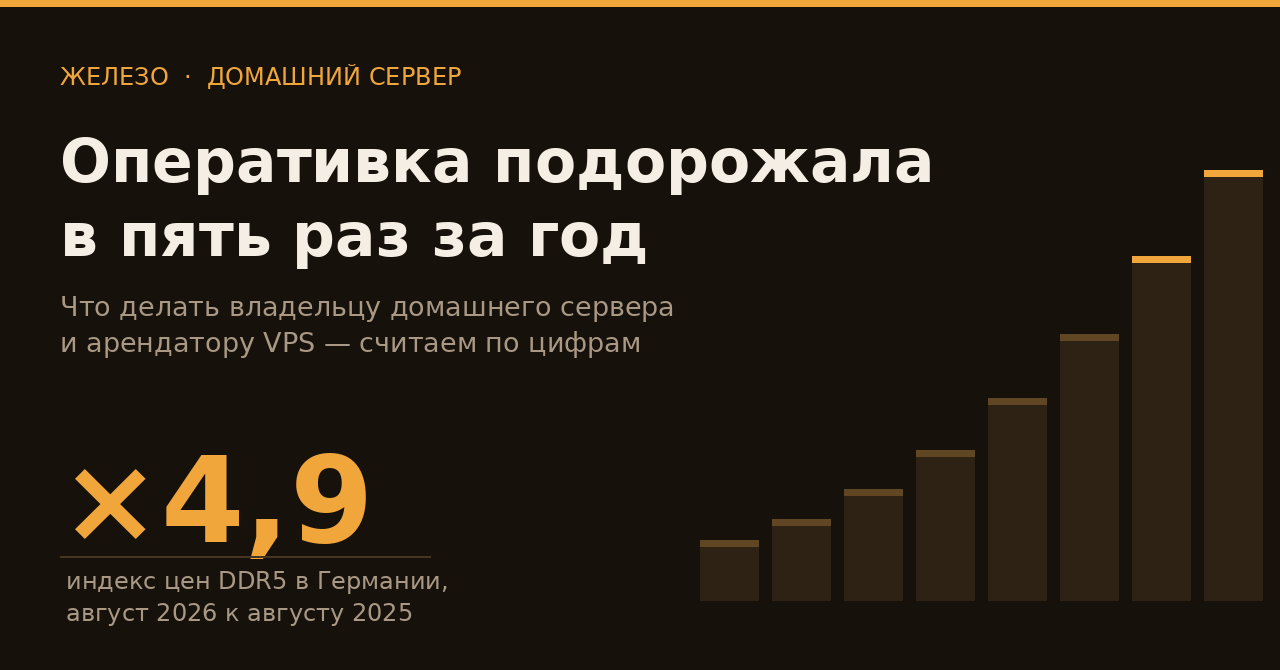
Комплект 64 ГБ DDR5-6000, который год назад стоил 222 доллара, сейчас стоит 1272. Это не опечатка и не редкая позиция у одного продавца: 17 августа Tom’s Hardware опубликовал сводку розничных цен в США, и там нет ни одной строки с ростом меньше чем в два с половиной раза. В тот же день TrendForce сообщил, что немецкий индекс цен на DDR5 поднялся с 445 % до 486 % — то есть типичный комплект памяти в Германии стоит почти в 4,9 раза дороже, чем год назад.
Для тех, кто держит дома сервер или платит за VPS, это перестало быть новостью «где-то про рынок». Это про следующий апгрейд.
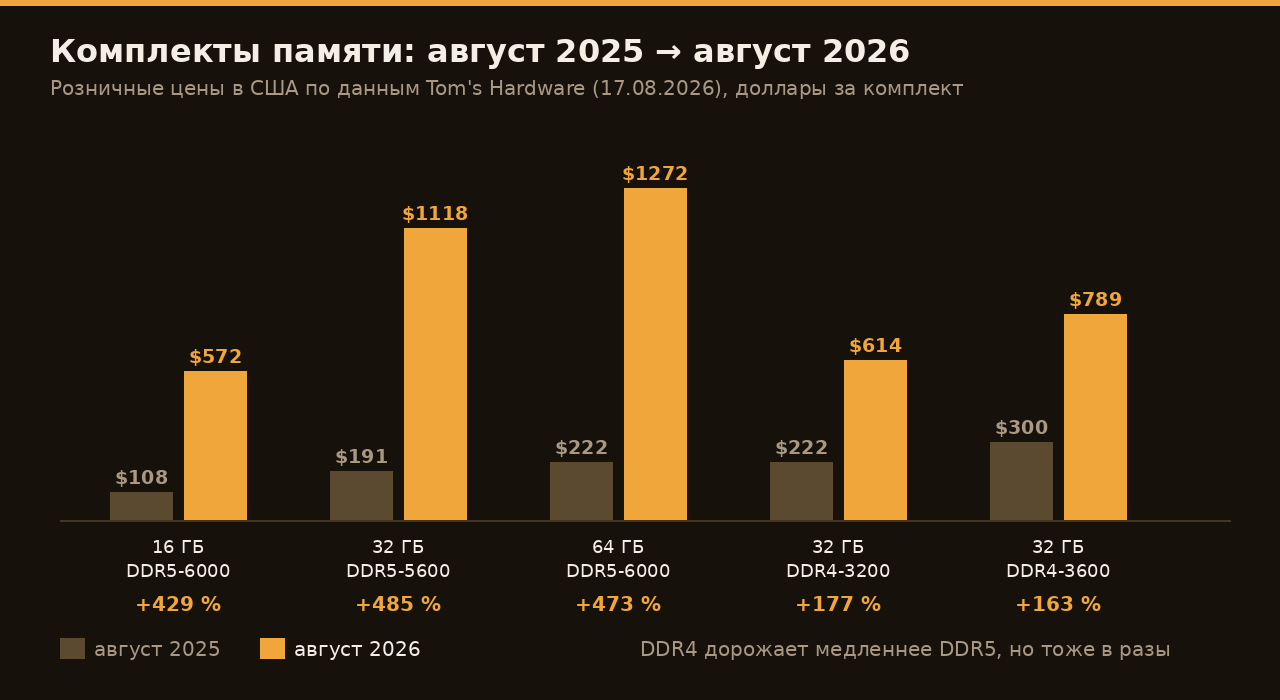
По данным Tom’s Hardware от 17.08.2026, розничные цены в США
Цифры, которые стоит запомнить
Розница в США, август 2025 → август 2026:
| Комплект | Было | Стало | Рост |
|---|---|---|---|
| 16 ГБ DDR5-6000 | $108 | $572 | +429 % |
| 32 ГБ DDR5-5600 | $191 | $1118 | +485 % |
| 64 ГБ DDR5-6000 | $222 | $1272 | +473 % |
| 32 ГБ DDR4-3200 | $222 | $614 | +177 % |
| 32 ГБ DDR4-3600 | $300 | $789 | +163 % |
Отдельная строка — 128 ГБ DDR5-6400 за 3399 долларов. Это примерно в десять раз выше минимальной цены, которую вообще фиксировали для такого объёма (329 долларов).
DDR4 дорожает заметно медленнее DDR5 — но «медленнее» здесь означает рост в 2,6–2,8 раза, а не стабильность.
Почему DDR4 отстаёт от DDR5 по темпу роста. Производители сворачивают старые линии в пользу того, что покупают дата-центры, поэтому DDR4 растёт скорее от дефицита предложения, чем от конкуренции за него. Практический эффект для нас: платформы на DDR4 пока остаются относительно вменяемым входным билетом в домашний сервер — но это окно, а не константа.
Откуда взялся такой скачок
Причина у обоих источников одна и называется одинаково: закупки под ИИ-инфраструктуру. Гиперскейлеры законтрактовали объёмы вперёд, розница получает остатки. Формулировка Tom’s Hardware звучит почти карикатурно — массовые чипы DRAM сейчас стоят больше половины цены золота за килограмм.
TrendForce добавляет прогнозную часть: контрактные цены на серверную DRAM в третьем квартале 2026 года ожидаются с ростом на 13–18 % за квартал, а состояние недопоставки аналитики распространяют до 2027 года.
Прогноз — это прогноз. «Дефицит до 2027 года» звучит уверенно, но в 2018-м рынок памяти развернулся вниз за один квартал после почти двух лет роста. Планировать закупку, исходя из того, что «дальше будет только дороже», — такая же ставка, как и ждать падения. Разница лишь в том, что первая ставка стоит денег прямо сейчас.
Про Китай оба источника говорят осторожнее: сообщается о недельном скачке спотовых цен на DDR5 примерно на 14 %, при этом 24-гигабитная микросхема доходила до 48 долларов, а 16-гигабитная — до 40. Это данные торговой площадки в Шэньчжэне в пересказе TrendForce, а не собственный замер издания, и относиться к ним стоит соответственно.
Сценарий 1. Сервер уже собран и работает
Самый частый вопрос в этой ситуации — «докупать ли планки на будущее». Прежде чем отвечать, полезно посмотреть, сколько памяти у вас реально занято, а не сколько показывает free.
# сколько памяти можно освободить без свопа (available, а не free)
free -h

# кто на самом деле ест: топ-15 процессов по RSS
ps -eo pid,comm,rss --sort=-rss | head -16

# сколько занимает кэш ARC, если у вас ZFS
cat /proc/spl/kstat/zfs/arcstats | grep -E '^size|^c_max'
Классическая ловушка домашнего сервера: цифра в мониторинге показывает 90 % занятой памяти, владелец идёт покупать планки — а это страничный кэш и ARC, которые ядро отдаст под нагрузку в ту же секунду. Смотреть надо на available в выводе free, на объём свопа и на то, приходил ли вообще OOM-killer (journalctl -k | grep -i "out of memory"). Если OOM ни разу не срабатывал и своп не тронут — покупать нечего.
Второе, что стоит сделать при нынешних ценах, — перестать выбрасывать. Старые планки DDR4 из выведенных из эксплуатации машин сейчас стоят реальных денег, а совместимость домашнего сервера с ними обычно шире, чем кажется.
Сценарий 2. Собираете новый сервер прямо сейчас
Здесь память впервые за долгое время может оказаться самой дорогой позицией в смете — дороже процессора и дороже дисков. Что это меняет:
- Считайте бюджет от памяти, а не от процессора. Сначала решите, сколько гигабайт вам нужно, и только потом подбирайте платформу под этот объём.
- Не берите четыре планки там, где хватит двух. Оставленные свободными слоты — это опцион на будущее, и сейчас он стоит дороже обычного.
- Смотрите на б/у серверные платформы с DDR4 RDIMM/LRDIMM. Регистровая память с выведенных из эксплуатации серверов остаётся самым дешёвым способом получить много гигабайт — при условии, что материнская плата её принимает.
- Пересчитайте, нужен ли вам вообще отдельный сервер под каждую задачу. Один узел с 32 ГБ сейчас обходится дешевле, чем два по 16.
Чего делать не надо — покупать «на вырост» комплект вдвое больше нужного, рассчитывая, что через год он подорожает ещё. Это уже не апгрейд, а сделка на товарном рынке, причём с плечом в виде вашего свободного бюджета и без возможности быстро выйти.
Сценарий 3. Вы арендуете VPS
Прямых данных о том, что тарифы на аренду выросли вслед за железом, у меня нет — и я не буду утверждать этого без источника. Что можно сказать обоснованно: себестоимость гигабайта памяти у хостера растёт вместе с рынком, а тарифные линейки обычно пересматриваются при обновлении парка, а не мгновенно.
Из этого следуют две практические вещи. Первая: если у вас есть долгосрочный тариф с фиксированной ценой и большим объёмом памяти — это сейчас актив, и продлевать его выгоднее, чем мигрировать ради экономии пары долларов. Вторая: если планируете переезд на конфигурацию побольше, имеет смысл проверить цену заранее, а не в момент, когда упрётесь в лимит.
Общий принцип для всех трёх сценариев одинаков: сначала измеряем, потом покупаем. При цене 572 доллара за 16 гигабайт стоимость ошибки «взял с запасом, а оно не понадобилось» выросла ровно во столько же раз, во сколько выросла память.
Если сервер только берётся в аренду и вы ещё выбираете конфигурацию — пригодится чек-лист приёмки VPS в первый час.
Кто-нибудь уже столкнулся с этим на практике — пришлось отказаться от апгрейда или пересобрать план? И встречный вопрос: сколько памяти у вас реально занято под нагрузкой, если смотреть на available, а не на красивый график в мониторинге?