С 2 августа 2026 года в Евросоюзе применяется статья 50 Регламента об искусственном интеллекте. Ключевое требование к разработчикам генеративных систем сформулировано там так: вывод должен быть «помечен в машиночитаемом формате и определяем как искусственно созданный или изменённый», а решения — «эффективными, совместимыми, устойчивыми и надёжными настолько, насколько это технически осуществимо». Для систем, выпущенных на рынок до этой даты, действует отсрочка до 2 декабря 2026 года. Потолок штрафа — 15 млн евро или 3 % мирового оборота.
С картинками и видео понятно: туда можно вшить незаметный сигнал в пиксели плюс подписанные метаданные. С текстом всё интереснее, и вокруг него накопилось изрядно уверенных заблуждений. Ниже — пять самых частых, и что говорят первоисточники: статья авторов SynthID-Text в Nature и тексты самого регламента.
Статья 50 адресована двум разным сторонам. Разработчик системы обязан помечать вывод машиночитаемо. Тот, кто систему применяет, обязан раскрывать дипфейки при первом же показе и помечать ИИ-текст, публикуемый «с целью информирования общественности по вопросам общественного интереса» — если только этот текст не прошёл человеческую редактуру и контроль. Проверка орфографии редактурой не считается.
Заблуждение 1. «Водяной знак — это невидимые символы в тексте»
Это описание одного из подходов, причём самого примитивного: подмена обычного пробела на другой пробельный символ Юникода, вставка символов нулевой ширины и тому подобное. Такой знак снимается нормализацией строки — одной командой.
Тот подход, вокруг которого построена регуляторная дискуссия, устроен принципиально иначе: он не добавляет к тексту ничего. Он меняет то, какие именно токены модель выбирает при генерации.
В схеме SynthID-Text это выглядит так. На каждом шаге генерации из последних H = 4 токенов и секретного ключа выводится seed. Seed задаёт набор псевдослучайных функций g₁…g₃₀ — по умолчанию слоёв тридцать. Кандидаты набираются из распределения модели, разбиваются на пары и играют турнир: в каждом слое из пары побеждает токен с большим значением g своего слоя. Победитель последнего слоя и попадает в текст.
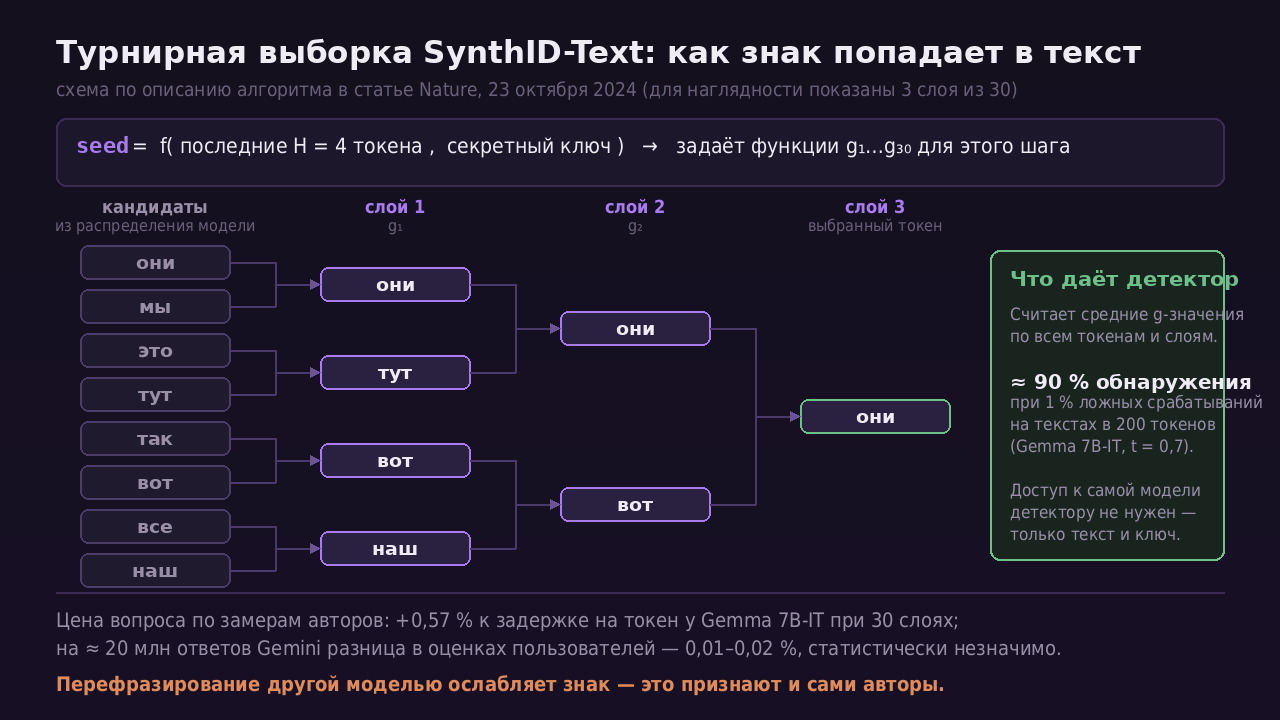
Никакого «водяного знака» в тексте при этом нет — есть статистический перекос в сторону токенов, выигрывающих турнир по ключу. Прочитать его глазами невозможно в принципе.
Про гомоглифы и невидимые символы у крупных провайдеров периодически пишут в блогах — например, в разборе Шона Гёдеке от 2 июля 2026 года такое утверждается про OpenAI и Anthropic. Подтверждения от самих компаний найти не удалось, официальных заявлений на этот счёт нет. Считайте это неподтверждённым наблюдением, а не фактом.
Заблуждение 2. «Такая подмена токенов испортит текст»
Интуитивно кажется, что если запрещать модели выбирать лучший токен, качество упадёт. Авторы SynthID-Text проверили это на масштабе, который трудно оспорить: около 20 миллионов ответов Gemini, часть с водяным знаком, часть без.
Разница в пользовательских оценках: доля «палец вверх» отличалась на 0,01 % (в пользу версии со знаком), доля «палец вниз» — на 0,02 % (тоже в пользу версии со знаком). Обе разницы статистически незначимы и укладываются в 95-процентные доверительные интервалы. Отдельно провели ручную оценку 3000 ответов по пяти критериям — грамматичность, релевантность, корректность, полезность, общее впечатление — значимых различий не нашли.
Вычислительная цена тоже небольшая: 15,527 мс на токен без знака против 15,615 мс со знаком на Gemma 7B-IT, то есть +0,57 % к задержке при тридцати слоях.
Так что вот это заблуждение — действительно заблуждение. Заметного налога на качество в опубликованных замерах нет.
Заблуждение 3. «Чтобы проверить текст, нужен доступ к модели»
Нет. Детектору нужны только сам текст (в токенизированном виде) и ключ. Он пересчитывает средние значения g по всем токенам и всем слоям и сравнивает с порогом. Модель, её веса и её API при этом не нужны — что и делает схему пригодной для внешней проверки.
Отсюда, впрочем, и первая практическая проблема: ключ. Пока он секретный, проверить текст может только владелец модели. Как только ключ становится доступен для «совместимости» (которой требует тот же регламент), знак становится и подделываемым, и снимаемым.
Требование «эффективно, совместимо, устойчиво» и модель безопасности «знак держится на секретности ключа» тянут в противоположные стороны. Это не придирка к формулировке — это структурное противоречие, и в первоисточниках оно не разрешено ни с технической, ни с регуляторной стороны.
Заблуждение 4. «Достаточно одного абзаца, чтобы определить»
Здесь цифры из статьи в Nature довольно отрезвляющие. Для неискажающего варианта на Gemma 7B-IT при температуре 0,7 текст длиной 200 токенов даёт около 90 % обнаружения при 1 % ложных срабатываний. Двести токенов — это примерно 700–900 знаков, то есть абзаца три-четыре.
Дальше — хуже. Надёжность знака растёт с длиной текста и падает с уменьшением энтропии распределения. На коротких ответах, на фактических вопросах с единственно правильным ответом, на коде, на списках — там, где модель почти не имеет выбора между токенами, — вшивать знак попросту некуда. Именно поэтому регламент выводит из-под требования маркировки короткие последовательности символов и исходный код.
Один процент ложных срабатываний звучит мало ровно до того момента, пока вы не проверяете тысячу студенческих работ. Тогда это десять человек, обвинённых ни за что. И это цифра лабораторного детектора на собственном знаке — а не тех коммерческих «детекторов ИИ-текста», которые угадывают по перплексии и не имеют ни ключа, ни доступа к статистике модели. У этих последних никакой проверяемой точности не публикуется вовсе, и опираться на их вердикт при принятии решений о людях нельзя.
Заблуждение 5. «Если знак вшит, его уже не убрать»
Убрать можно, и авторы это признают прямо: водяные знаки такого типа «ослабляются правками текста, например перефразированием с помощью языковой модели». Дальше идёт оговорка — «хотя обычно это заметно меняет текст», — но для практики она мало что даёт: пропустить свой текст через другую, пусть даже слабую, модель с инструкцией «перепиши» занимает секунды и стоит копейки. Перевод туда-обратно работает так же.
В том же ряду авторы перечисляют нерешённые вопросы: кража знака, подделка знака (когда чужому человеческому тексту приписывают знак модели) и невозможность заставить соблюдать схему разработчиков открытых моделей. Веса, которые можно скачать и запустить локально, никакого турнирного отбора выполнять не обязаны — а именно на них и работает большая часть самохостящегося ИИ, о котором на форуме была отдельная тема про локальные LLM с OpenAI-совместимым API.
Что из этого следует
Маркировка ИИ-текста — это не механизм доказательства, а механизм гигиены. Она хорошо работает против ленивого массового потока: миллионы сгенерированных отзывов, комментариев и SEO-текстов, которые никто не станет перефразировать, действительно станут отличимыми. Она не работает против того, кто целенаправленно её обходит: одна прогонка через другую модель — и знака нет.
Практический вывод для тех, кто по эту сторону: не стройте процессы на предположении, что происхождение текста можно установить технически. Ни «детектор показал 87 % ИИ» не является основанием для решения о человеке, ни отсутствие знака не является доказательством, что писал человек. А вот к тому, что в ЕС публикуемые «для информирования общественности» материалы теперь требуют пометки, если их не вычитал человек, стоит отнестись серьёзно — ответственность здесь лежит уже на том, кто публикует.
Смежный сюжет о том, как хрупки бывают технические гарантии вокруг вывода моделей, разбирался в теме про вскрытие зашифрованных reasoning-блоков.
Источники
- Dathathri et al. Scalable watermarking for identifying large language model outputs — Nature 634, 818–823 (23 октября 2024) — устройство турнирной выборки, замеры качества на 20 млн ответов, показатели обнаружения, признанные авторами ограничения
- Статья 50 Регламента ЕС об ИИ — полный текст — формулировки об обязанностях провайдеров и применяющих сторон
- Еврокомиссия: FAQ по обязательствам прозрачности статьи 50 — дата применения, отсрочка до 2 декабря 2026, исключения, размеры штрафов
- Sean Goedecke. Text AI watermarks will always be trivial to remove (2 июля 2026) — критический разбор; утверждения о гомоглифах у конкретных компаний независимо не подтверждены
Практический вопрос к тем, кто гоняет локальные модели: если требование маркировки в итоге доберётся и до открытых весов, во что оно превратится — в поле в конфиге, которое все отключат первым делом, или в обязанность площадок проверять загружаемый контент? И встречал ли кто-нибудь на практике вменяемый детектор ИИ-текста с опубликованной точностью?