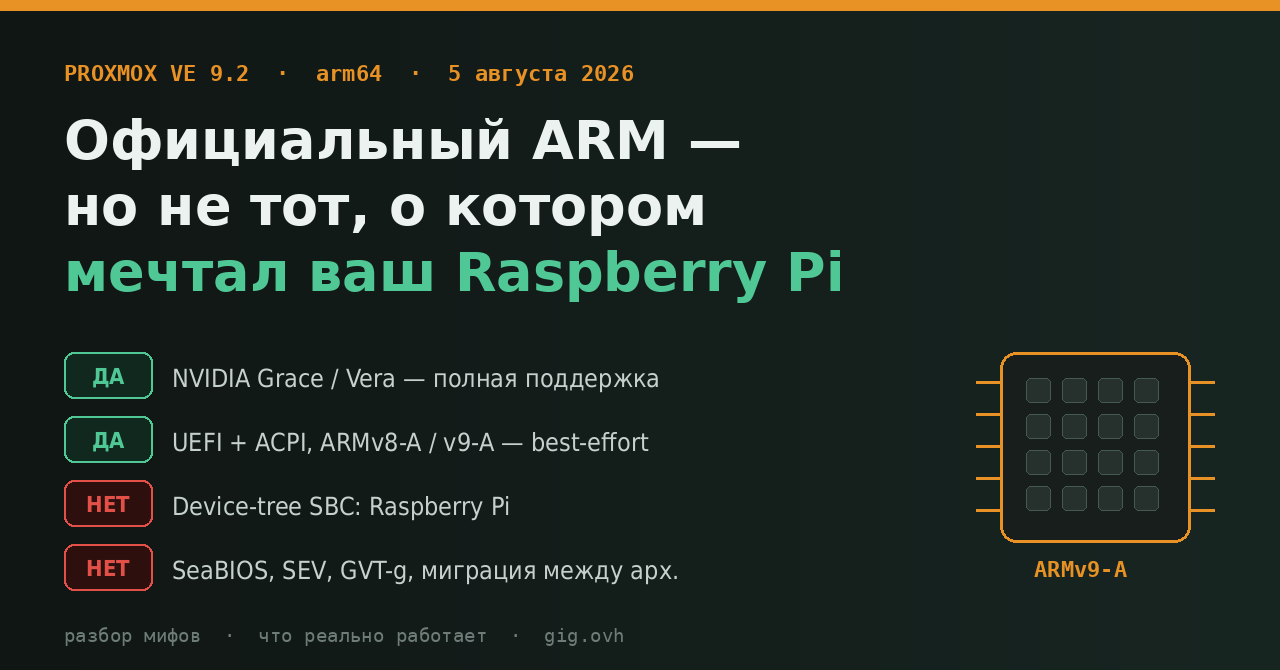
5 августа Proxmox выпустил пресс-релиз: Proxmox VE 9.2 официально доступен для 64-битного ARM. Формулировка «official arm64 support» за сутки успела превратиться в форумах и телеграм-каналах в несколько устойчивых заблуждений. Разберём их по очереди — там, где мифу противопоставлен текст самого анонса, это видно сразу.
Миф 1. «Ну всё, ставим Proxmox на Raspberry Pi»
Нет. И это написано прямым текстом: хост обязан грузиться через UEFI и описывать своё железо через ACPI. Одноплатники, которые описывают железо только через device tree, — а Raspberry Pi назван в анонсе поимённо — не поддерживаются.
Джефф Гирлинг, который поставил PVE 9.2 на рабочую станцию Ampere Altra Max, отмечает: там всё встало со стандартного ISO без плясок именно потому, что у платформы нормальная UEFI/ACPI-прошивка. Про Pi он же пишет, что энтузиасты добивались запуска через сторонние UEFI-прошивки — но это ровно та самая «неподдерживаемая конфигурация», за которую в случае чего никто не отвечает.
Иерархия поддержки в анонсе трёхуровневая: полная — NVIDIA Grace и Vera; best-effort — прочее UEFI-железо на ARMv9-A и новее (ARMv8-A «как правило работает», тоже best-effort); никак — device-tree-only одноплатники.
Миф 2. «Это урезанная сборка, для галочки»
Тоже мимо. CTO Proxmox Томас Лампрехт формулирует цель прямо: не «запустить на новой архитектуре», а «дать полный паритет функций — KVM, сеть, кластеризация, ZFS и Ceph ведут себя ровно так, как пользователи ожидают от сборок x86-64».
Технически это подкреплено тем, что arm64-ветка делит с x86-64 кодовую базу, репозитории пакетов и цикл релизов. То есть это не отдельный форк, который отстанет через полгода, а вторая архитектура в том же дереве.
Миф 3. «Раз паритет — значит, ограничений нет»
А вот здесь ограничения настоящие, и их стоит знать до закупки железа:
- SeaBIOS на arm64 нет. Все гости грузятся через UEFI — AAVMF, ARM-сборку OVMF. Старая ВМ с legacy-загрузкой просто не поедет.
- Гость запускается только на ноде своей архитектуры, а живая миграция возможна только между нодами одной архитектуры. Смешанный кластер собрать можно, «перекинуть виртуалку с Xeon на Grace на лету» — нельзя.
- Нет x86-специфики: AMD SEV (шифрование памяти ВМ) и Intel GVT-g (разделяемые vGPU) остаются на x86.
- Нет пакета микрокода CPU — обновления микрокода на ARM живут в прошивке платформы, а не в дистрибутиве.
Отдельный пункт, о котором пишет обзор XDA: подписка на x86-64 не покрывает arm64-хосты, для них нужна отдельная. В самом пресс-релизе сказано осторожнее — «планы поддержки доступны по запросу». Если считаете бюджет на прод, уточняйте у Proxmox напрямую, а не по обзорам.
Кому это реально пригодно сегодня
Честный ответ: пока — владельцам серверных ARM-платформ. Grace Hopper и Vera в анонсе стоят не случайно, у релиза явный уклон в сторону AI-инфраструктуры, где ARM-хост с большим объёмом когерентной памяти рядом с GPU имеет смысл.
Для домашней лаборатории интереснее второй сценарий: Ampere Altra и подобные рабочие станции на б/у рынке уже не экзотика, и вот на них PVE 9.2 ставится штатно. Проверка на пригодность железа сводится к одному вопросу — умеет ли оно UEFI + ACPI. Если да, шансы высоки; если это SBC с device tree, шансов нет независимо от того, сколько у него ядер.
Кластерная арифметика: держать x86- и ARM-ноды в одном кластере имеет смысл ради общего управления и HA внутри своей архитектуры, но планировать ресурсы придётся двумя пулами. Заранее решите, какие сервисы у вас «архитектурно-нейтральные» (почти всё в контейнерах на многоарх-образах), а какие прибиты к x86 гвоздями.
Источники
- Пресс-релиз Proxmox: Proxmox Virtual Environment launches official Arm64 Support
- Официальный анонс в форуме Proxmox
- Jeff Geerling: Proxmox officially supports Arm, with some caveats
- XDA: Proxmox releases full support for the arm64 architecture, with a few key caveats
У кого уже есть ARM-железо, на котором это имеет смысл попробовать — Ampere, Grace, что-то ещё? И встречный вопрос: если бы Proxmox всё-таки поддержал device-tree-одноплатники, вы бы стали держать кластер на Pi — или это заведомо игрушка на фоне цены нормального мини-ПК на x86?