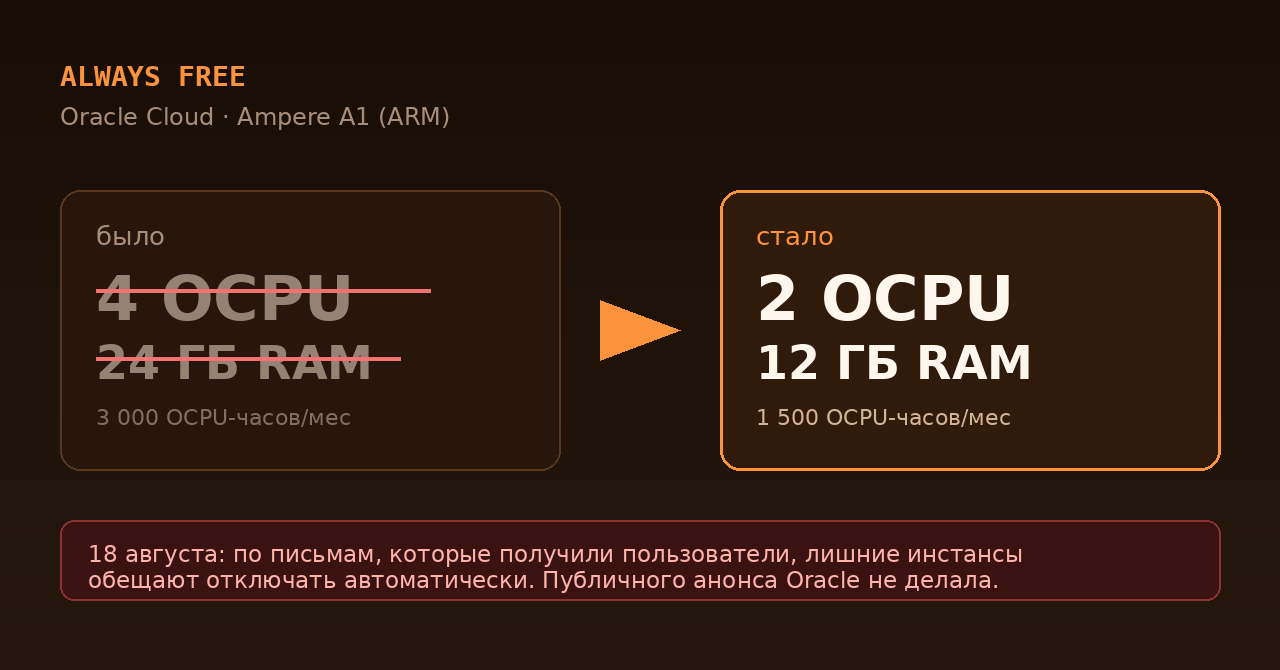
Бесплатный ARM-инстанс Oracle шесть лет был народным сервером для всего: прокси-нода, Pi-hole, панель, Vaultwarden, домашний VPN, мелкий Docker-стек. Щедрость была неприлично большой — 4 OCPU и 24 ГБ памяти даром. Теперь её ровно вдвое меньше, и у части пользователей есть дедлайн.
Разбираемся, что здесь факт, а что — пересказ писем в интернете, потому что публичного анонса Oracle не делала вообще.
Что подтверждается документацией
Текущая страница Always Free Resources в документации OCI формулирует лимит так: 1 500 OCPU-часов и 9 000 ГБ-часов в месяц на шейп VM.Standard.A1.Flex, что «для Always Free-тенантов эквивалентно 2 OCPU и 12 ГБ памяти». Раньше на том же месте стояли 3 000 OCPU-часов и 18 000 ГБ-часов — то есть 4 OCPU и 24 ГБ.
Изменение заметили в середине июня: об этом писали InfoQ, Linuxiac и heise. Официального объявления, поста в блоге или письма «мы меняем условия» не было — правку нашли в документации.
Остальные позиции Always Free в документации не изменились: два микро-инстанса VM.Standard.E2.1.Micro, 200 ГБ блочного хранилища суммарно, 10 ГБ объектного.
Отдельная старая ловушка, которая никуда не делась и сейчас становится опаснее: Oracle оставляет за собой право забрать простаивающий Always Free-инстанс, если за 7 дней 95-й перцентиль загрузки CPU, сети и памяти был ниже 20 %. Если ваш ARM-сервер простаивает и вы его пересоздадите после отключения — вернуть прежние 4 OCPU уже не выйдет.
Что известно только со слов пользователей
Дата 18 августа 2026 и автоматическое отключение лишних инстансов — из писем, которые получили пользователи. Об этом одновременно пишут в обсуждении на Hacker News (5 августа, ~200 голосов), в треде на V2EX и в рассылке selfh.st. Формулировка из пересказов: инстансы, превышающие Always Free-лимит, будут автоматически терминированы, привести потребление в норму нужно до этой даты.
Официального подтверждения этой даты со стороны Oracle найти не удалось — ни в блоге, ни в документации. Считайте это сообщением сообщества, а не фактом от вендора. При этом три независимых площадки сообщают об одном и том же письме, а сами лимиты в документации уже изменены — поэтому исходить лучше из худшего сценария.
Второй мутный момент: по пересказам разговоров с поддержкой, счета Pay-As-You-Go якобы могут сохранить старые лимиты, но письменного подтверждения этому тоже нет, а разные агенты поддержки отвечают по-разному. Для PAYG-аккаунта риск в другую сторону — не отключение, а внезапный счёт за превышение.
Что делать до 18 августа
Проверить, сколько вы сейчас потребляете. В консоли: Compute → Instances, посмотрите шейп каждой A1-машины. Через CLI:
oci compute instance list --compartment-id <OCID> \
  --query "data[?\"shape\"=='VM.Standard.A1.Flex'].{name:\"display-name\",ocpus:\"shape-config\".ocpus,mem:\"shape-config\".\"memory-in-gbs\",state:\"lifecycle-state\"}" \
  --output table
Сложите OCPU и память по всем A1-инстансам. Если в сумме больше 2 и 12 — вы в зоне риска.
Варианты действий, по возрастанию боли:
- Уменьшить шейп. A1.Flex меняет OCPU и память на остановленном инстансе: остановить → Edit → Edit shape → выставить 2 OCPU / 12 ГБ → запустить. Данные и загрузочный диск остаются на месте. Это самый безопасный путь: вы сами выбираете, что урезать, а не Oracle решает, что удалить.
- Схлопнуть два инстанса в один. Если у вас две машины по 2 OCPU / 12 ГБ — вместе это уже вдвое больше нового лимита. Перенесите сервисы в Docker Compose на одну и удалите вторую сами.
- Снять бэкап до дедлайна. Не полагайтесь на то, что данные переживут «автоматическое отключение»: снимите образ загрузочного тома (Boot Volume → Create Backup) или, что надёжнее, вытащите конфиги и тома данных к себе:
rsync -avz oracle:/opt/stack/ ./oracle-stack/. - Переехать. 2 OCPU / 12 ГБ на ARM — всё ещё больше, чем даёт кто-либо бесплатно, и для прокси-ноды, Pi-hole или Vaultwarden этого хватает с огромным запасом. Тяжёлое (медиасервер с транскодированием, сборки, локальные LLM) стоит увозить на платный VPS сразу — на такой машине оно и раньше жило впритык.
Полезно и отрезвление на будущее: «always free» в маркетинге облаков означает «вы за это не платите», а не «условия не изменятся». Инфраструктуру, потеря которой вас реально расстроит, на бесплатном тарифе держать не стоит — не из-за жадности Oracle, а потому что односторонний пересмотр условий здесь штатное событие, о котором даже не обязаны предупреждать письмом.
Источники
- Документация OCI, Always Free Resources: Always Free Resources
- InfoQ, «Oracle Quietly Halves Free Tier Ampere A1 Compute Limits with No Public Announcement»: Oracle Quietly Halves Free Tier Ampere A1 Compute Limits with No Public Announcement - InfoQ
- Linuxiac (14 июня 2026): Oracle Quietly Cuts Free Tier Ampere A1 Resources in Half
- Обсуждение на Hacker News (5 августа 2026): Oracle cut its Always Free ARM limits to 2 OCPU / 12GB, enforced Aug 18 | Hacker News
У кого-то из вас уже пришло письмо от Oracle — и что там дословно про дату и терминирование? И, раз повод есть: что у вас крутится на бесплатном A1 и переживёт ли оно урезание вдвое?